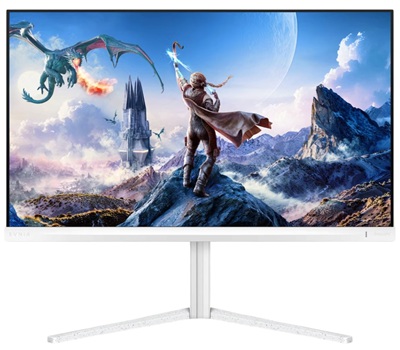
Philips Evnia 27M2D5901A 180Hz+ Dual Mode 5K IPS
As an Amazon Associate and Newegg Affiliate I earn from qualifying purchases made using the “Buy” button at the bottom of this post. Where possible, you'll be redirected to your nearest store. Further information on supporting our work.The 5K resolution on a 27″ screen delivers an exceptional pixel density, for very strong clarity and detail levels. Whilst this can be enticing from an image quality or ‘desktop real estate’ perspective, it’s also a demanding resolution to run when gaming. The Philips Evnia 27M2D5901A takes a ‘Dual Mode’ approach, supporting 180Hz for the native 5K resolution alongside up to 350Hz QHD. The monitor has the light-themed signature design associated with the series, including a marbled-effect plastic stand base. The top and side bezels are dual-stage, with slim panel border flush with the rest of the screen plus thin hard plastic outer part. The OSD (On Screen Display) is controlled by a joystick at the rear of the screen, towards the right side as viewed from the front.
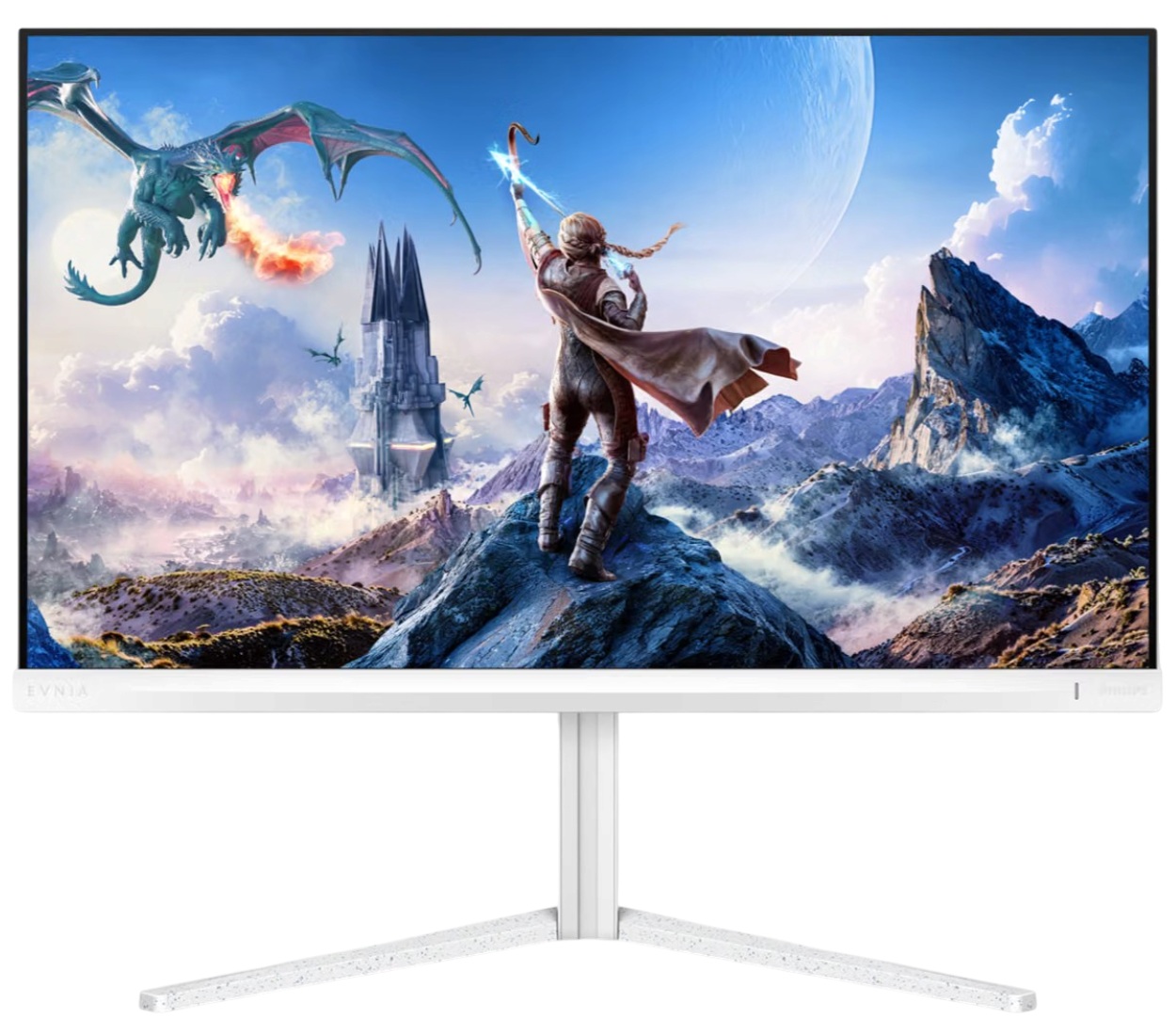
A 27″ 5120 x 2880 (5K UHD) IPS panel provides an exceptional pixel density ~218 PPI (Pixels Per Inch). Up to 180Hz (165Hz + mild factory OC) is supported at this resolution, with up to 350Hz (330Hz + mild factory OC) supported at the 2560 x 1440 or ‘1440p’ QHD resolution. VRR is supported via Adaptive-Sync and HDMI 2.1, allowing VRR technologies such as Nvidia ‘G-SYNC Compatible’ and AMD FreeSync to be used, with 48 – 180Hz (48 – 350Hz QHD) VRR range plus LFC. The monitor includes a matte anti-glare screen surface and features a 1000:1 static contrast ratio, 178°/178° viewing angles, 10-bit (8-bit + FRC) colour and a 1ms grey to grey response time. ‘Low Input Lag’ is specified, whilst a ‘Smart MBR’ strobe backlight setting is included that can be used with VRR if you wish. A flicker-free WLED backlight provides a 500 cd/m² typical maximum luminance and 98% DCI-P3 (95% Adobe RGB, 138% sRGB) colour gamut. Low Blue Light (LBL) settings are included for potentially more relaxing viewing.
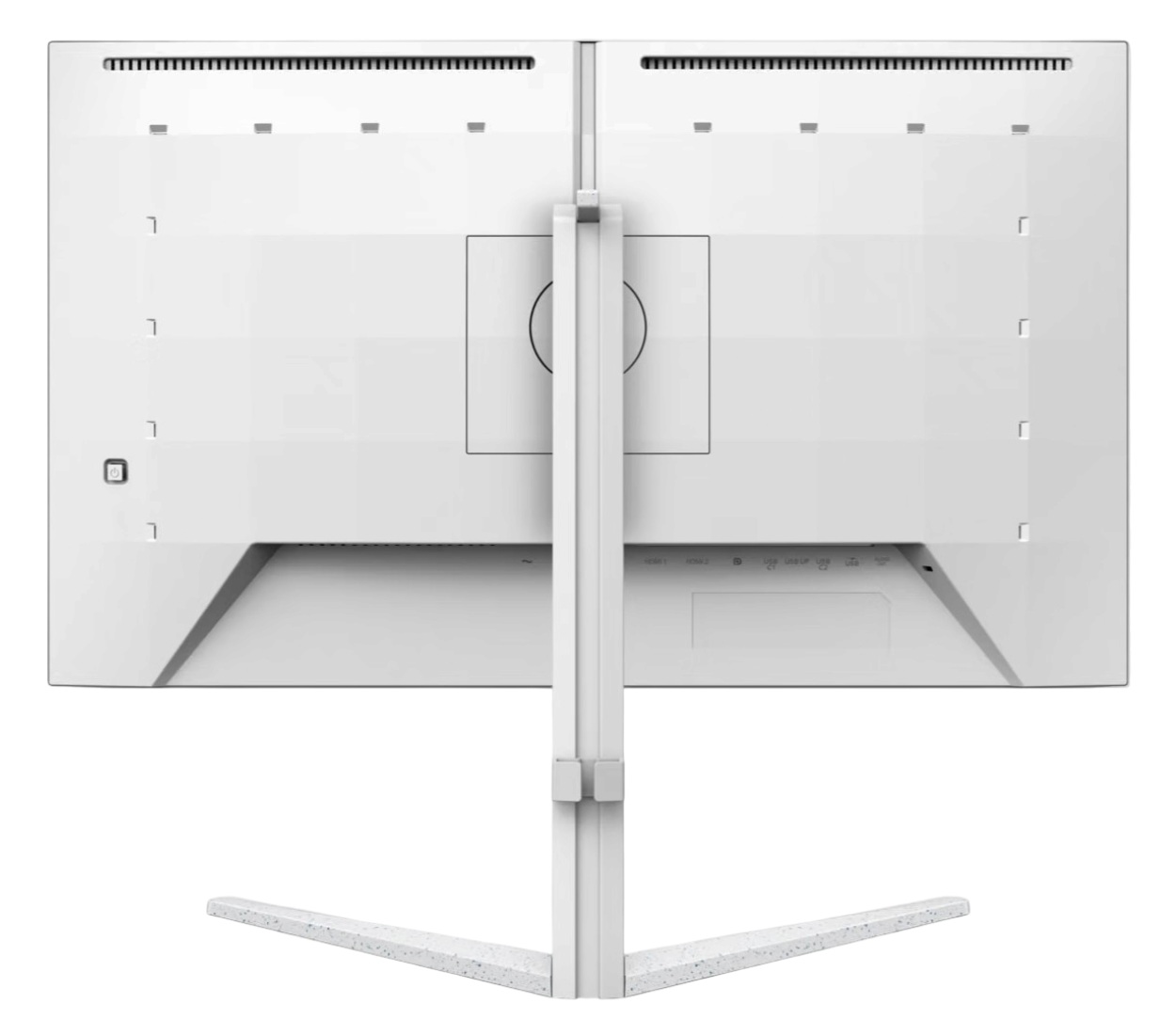
Basic HDR10 support is included at the VESA DisplayHDR 400 level. The screen can use 10-bit colour processing and put its generous DCI-P3 gamut to good use, though it lacks particularly high brightness by HDR standards and no local dimming is specified. The stand is fully adjustable, including 130mm (5.12 inches) height adjustment and pivot into portrait. 100 x 100mm VESA mounting is supported as an alternative. 3-sided ‘Ambiglow’ RGB LEDs are also included at the rear, which can create a relatively strong pool of light behind the monitor or can match their colours to parts of the image. The ports face downwards and include; AC power input (internal power converter), 2 HDMI 2.1 ports, DP 1.4, USB-C (96W PD, DP Alt Mode, upstream data), 2 USB 3.2 Gen1 ports (plus Type-B upstream) and a 3.5mm headphone jack. 2 x 5W speakers are included for potentially reasonably rich sound output, whilst KVM support allows easy USB peripheral reassignment and display input switching between 2 systems.
Further information can be found on the manufacturer’s website. The monitor is available from December 2026 with an MSRP of £699.